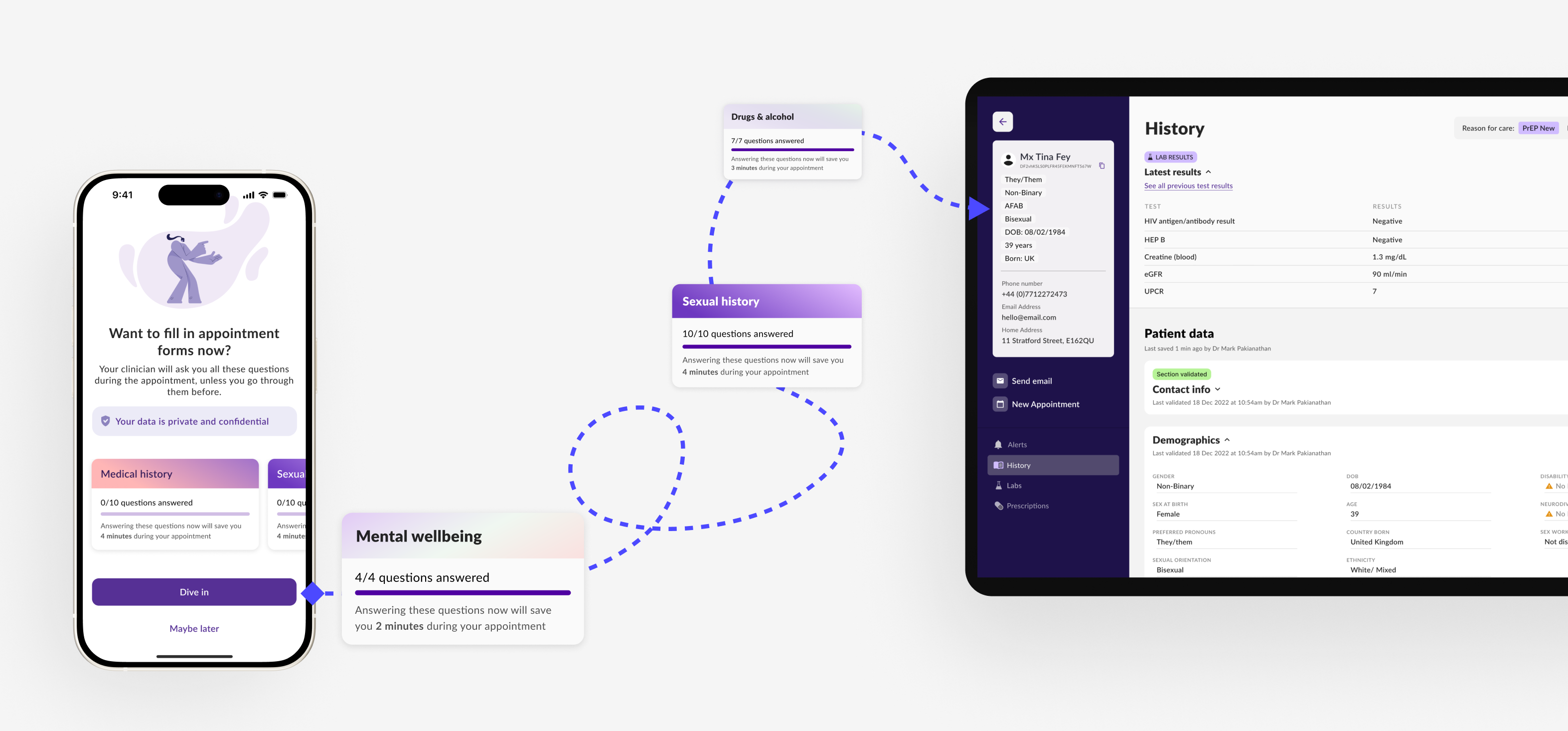
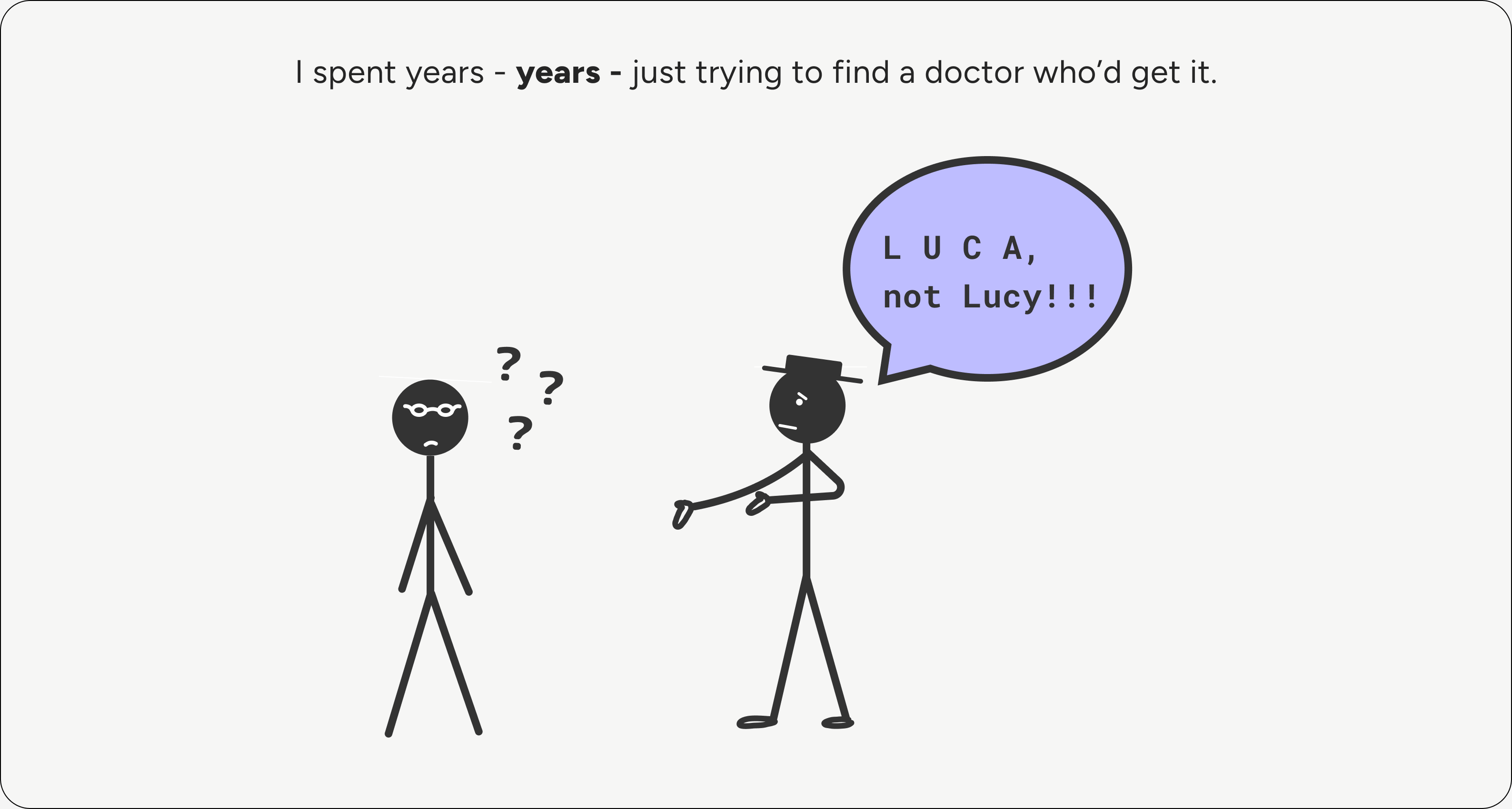
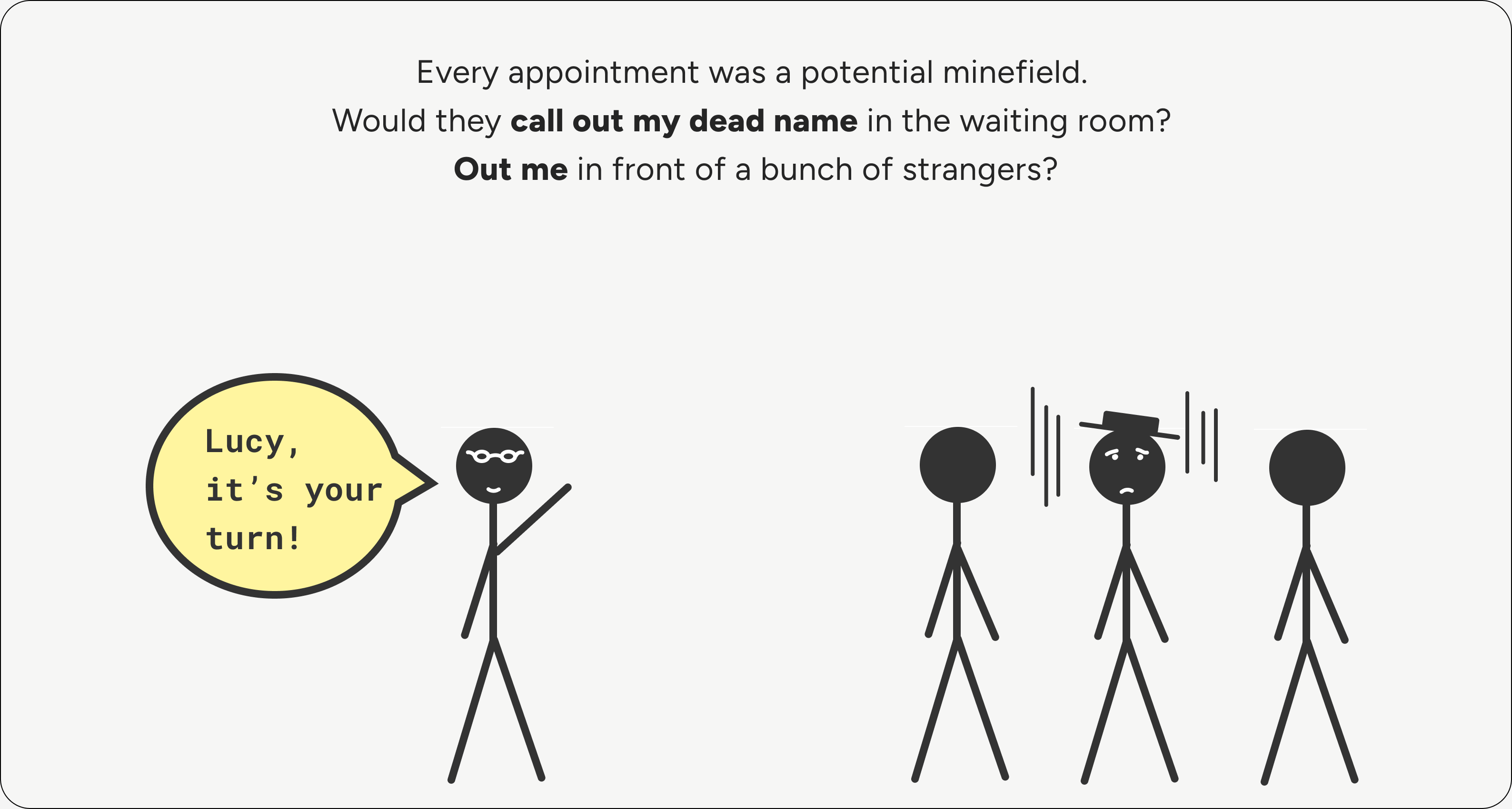
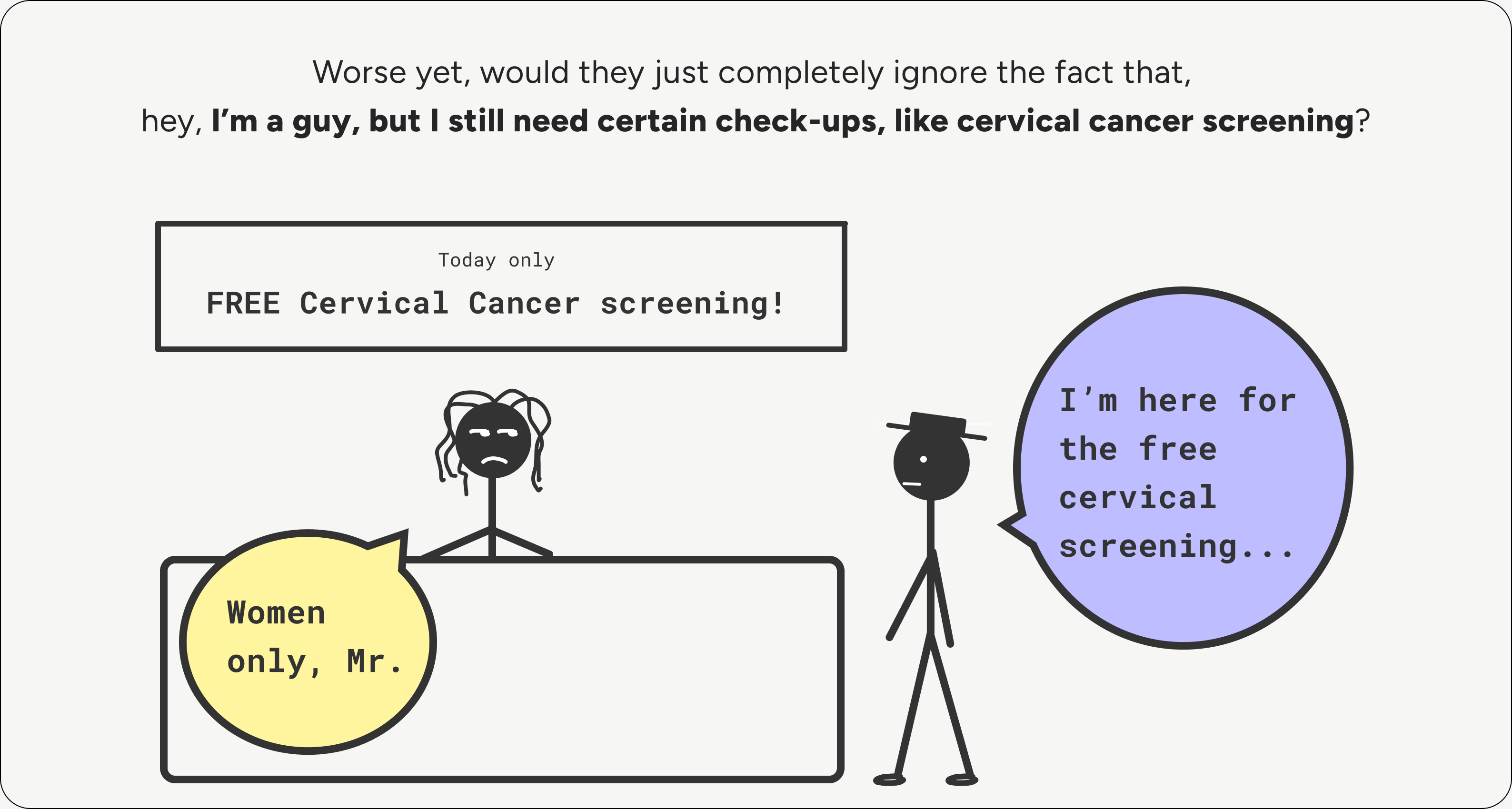
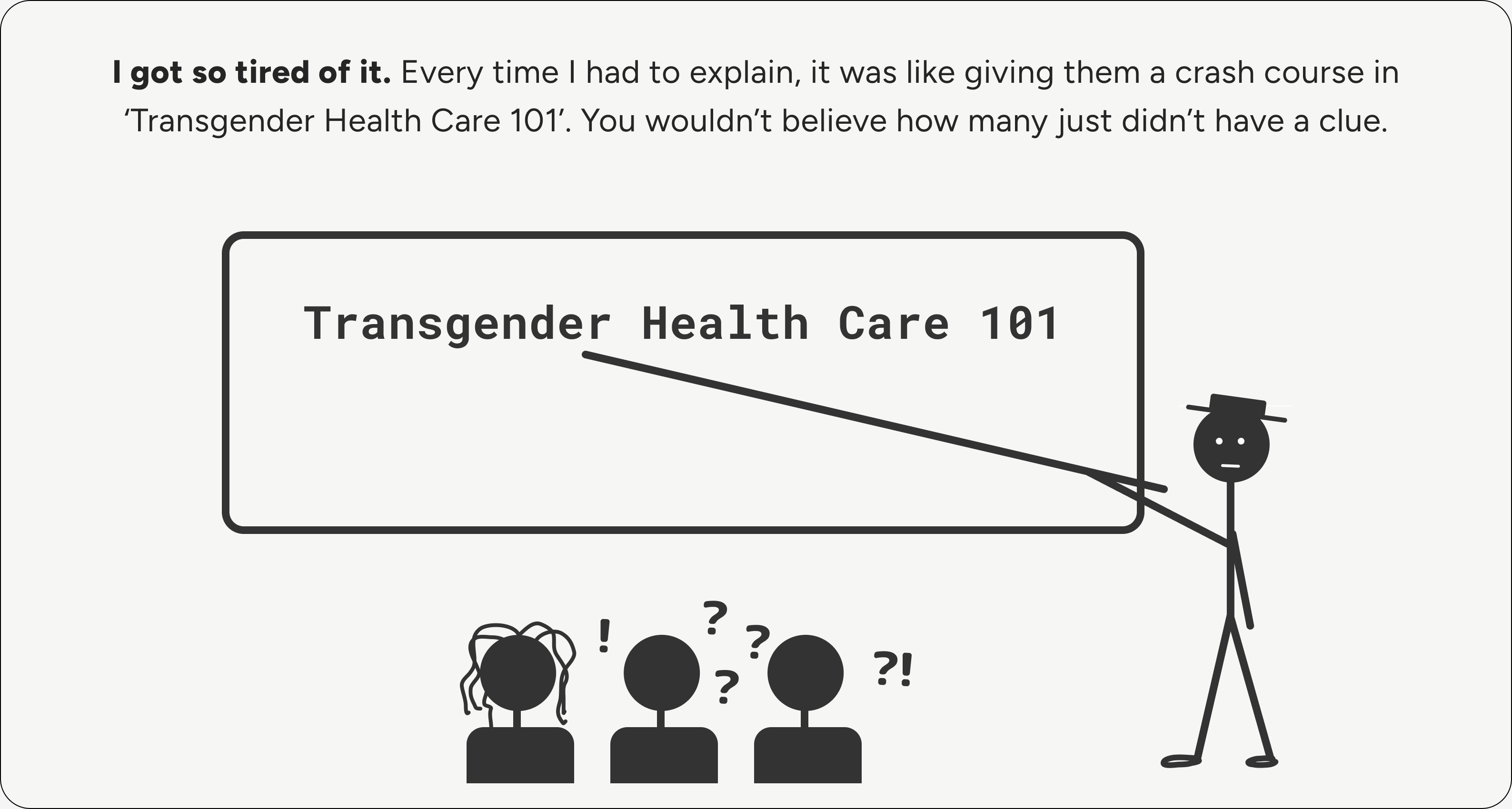
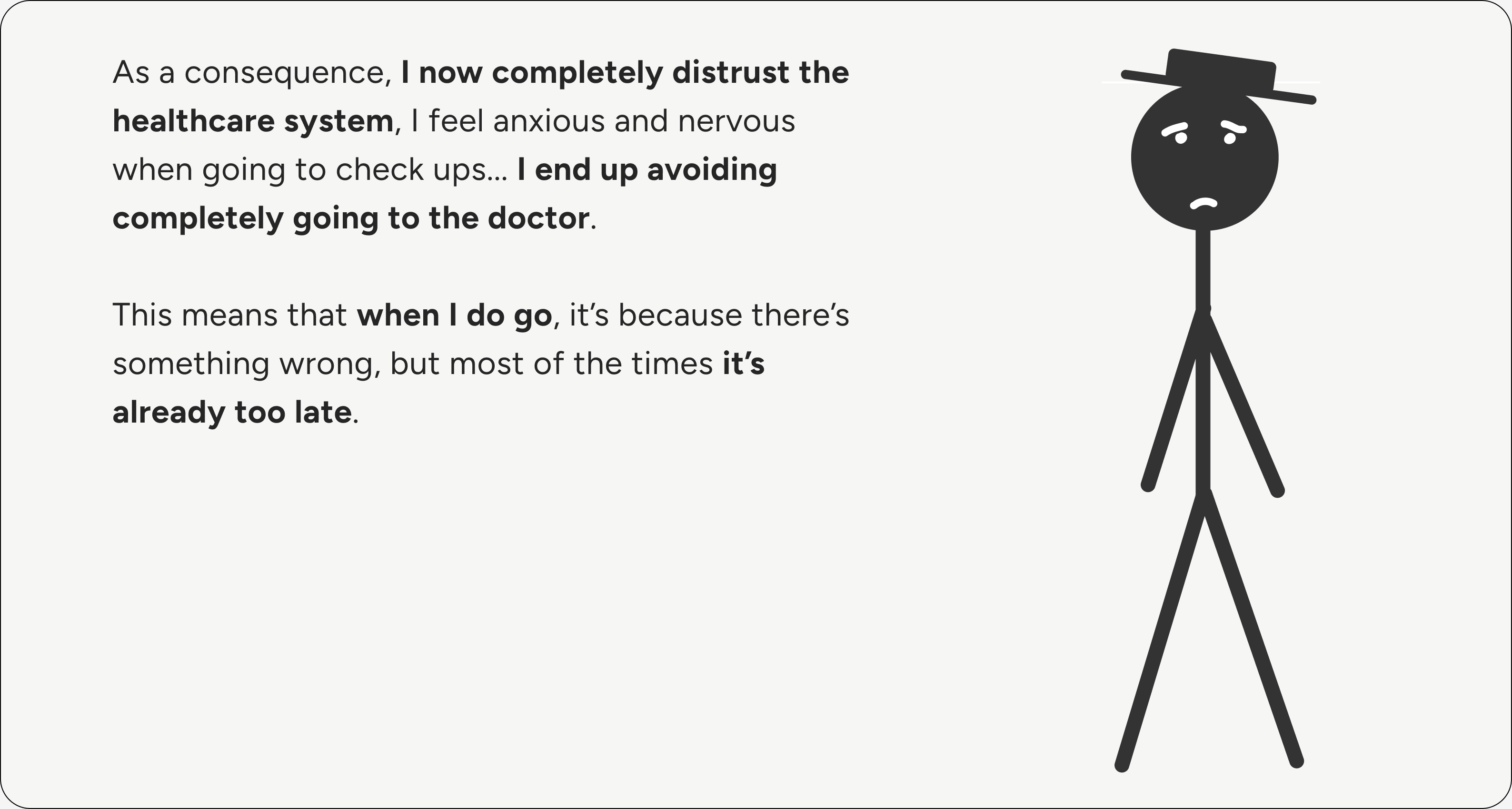
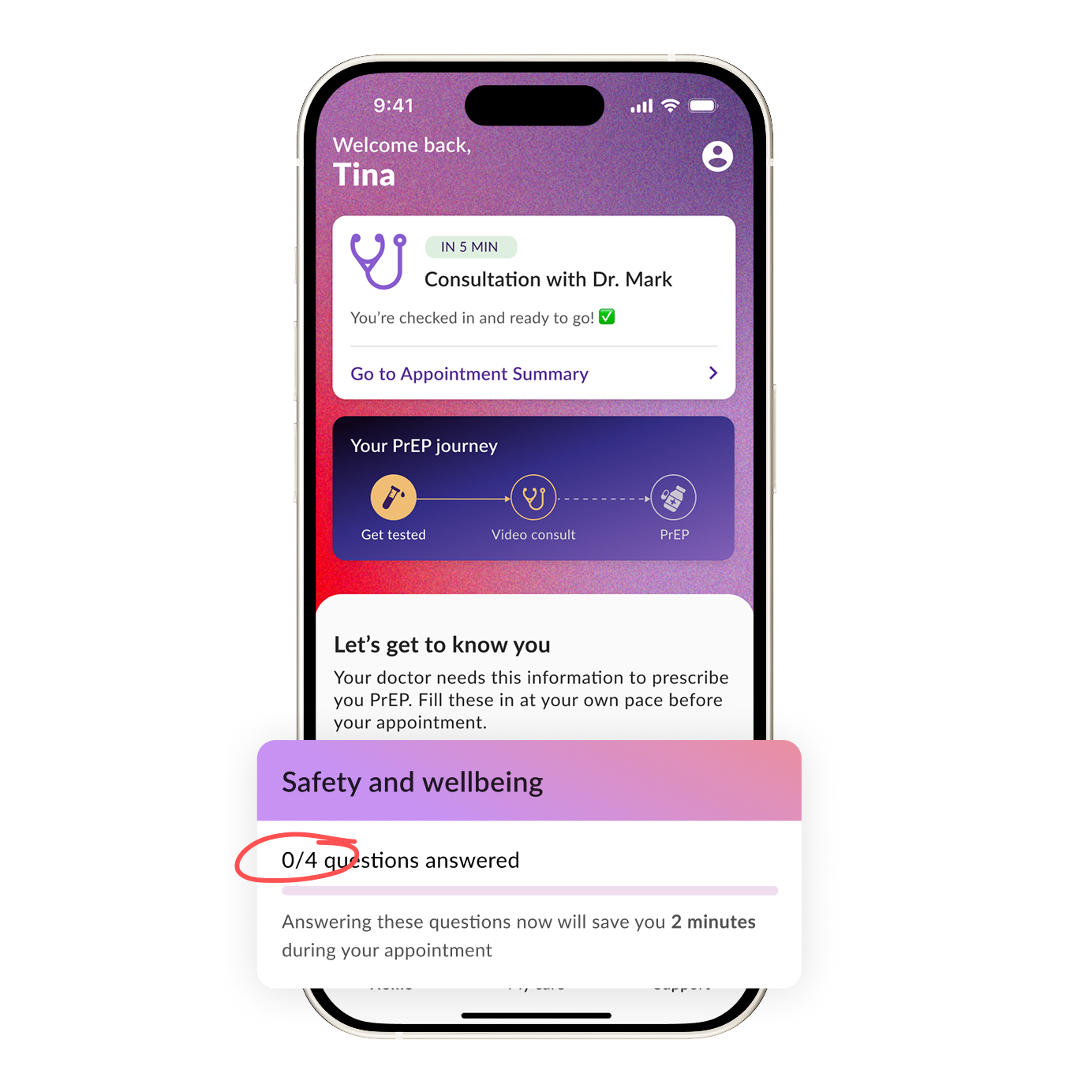
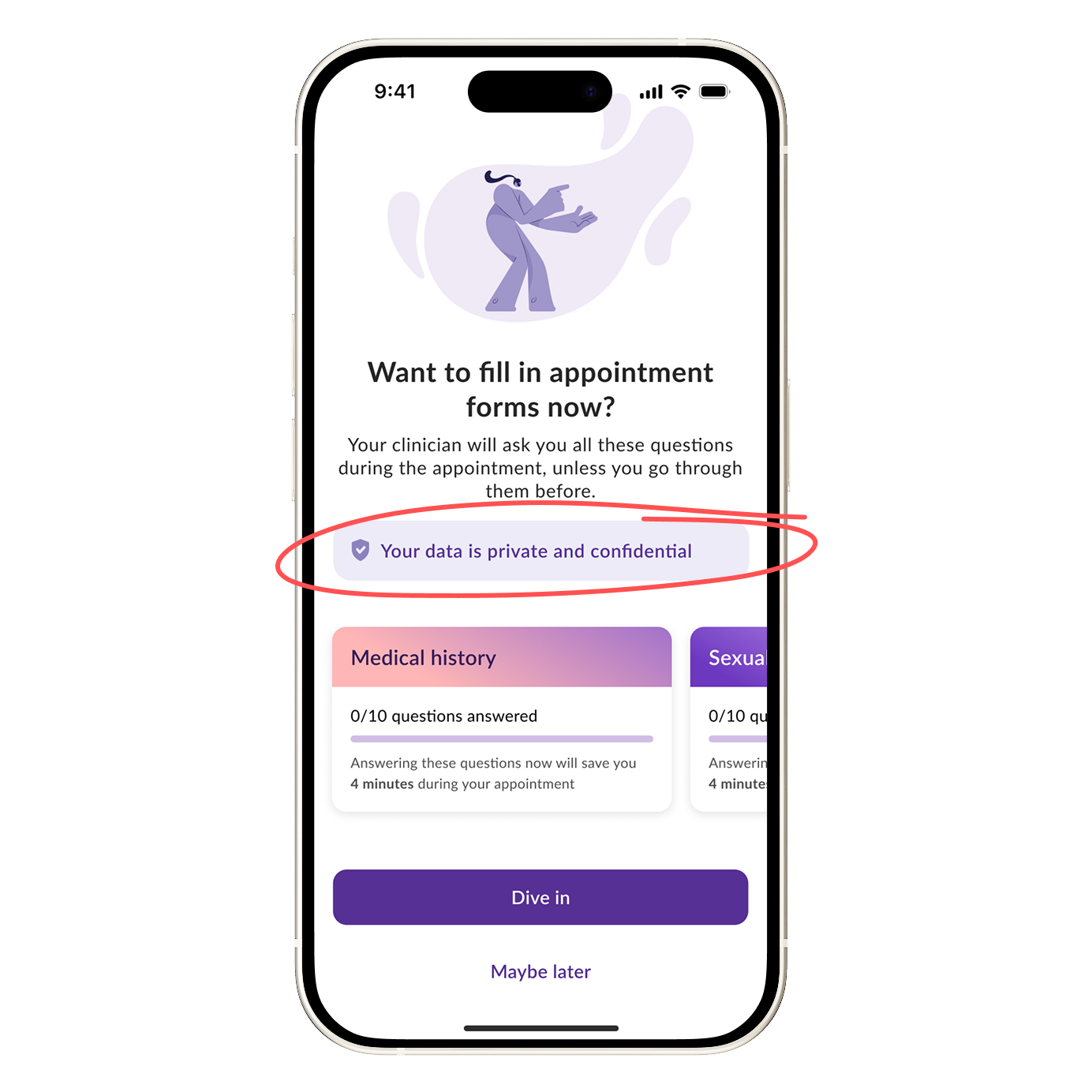
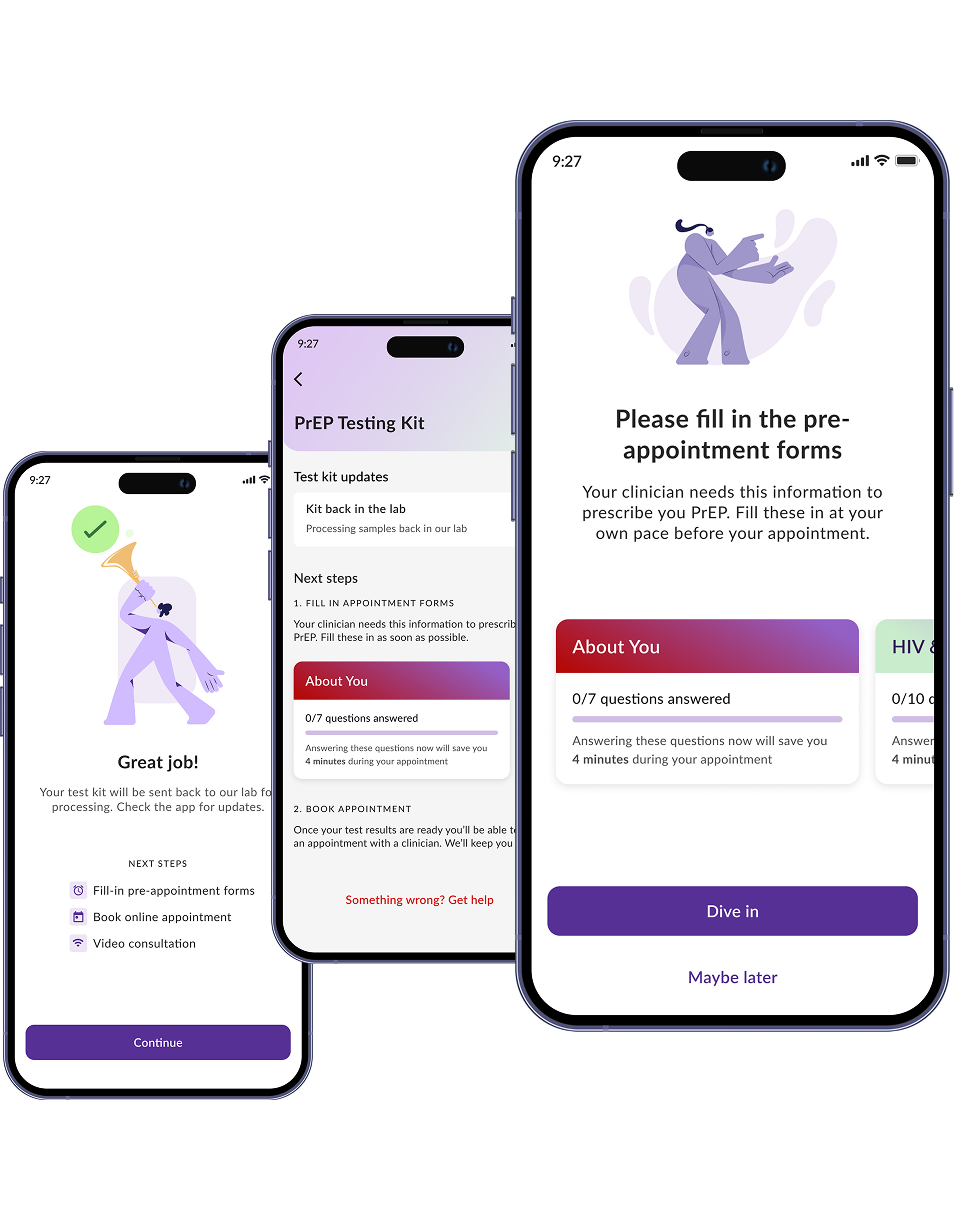
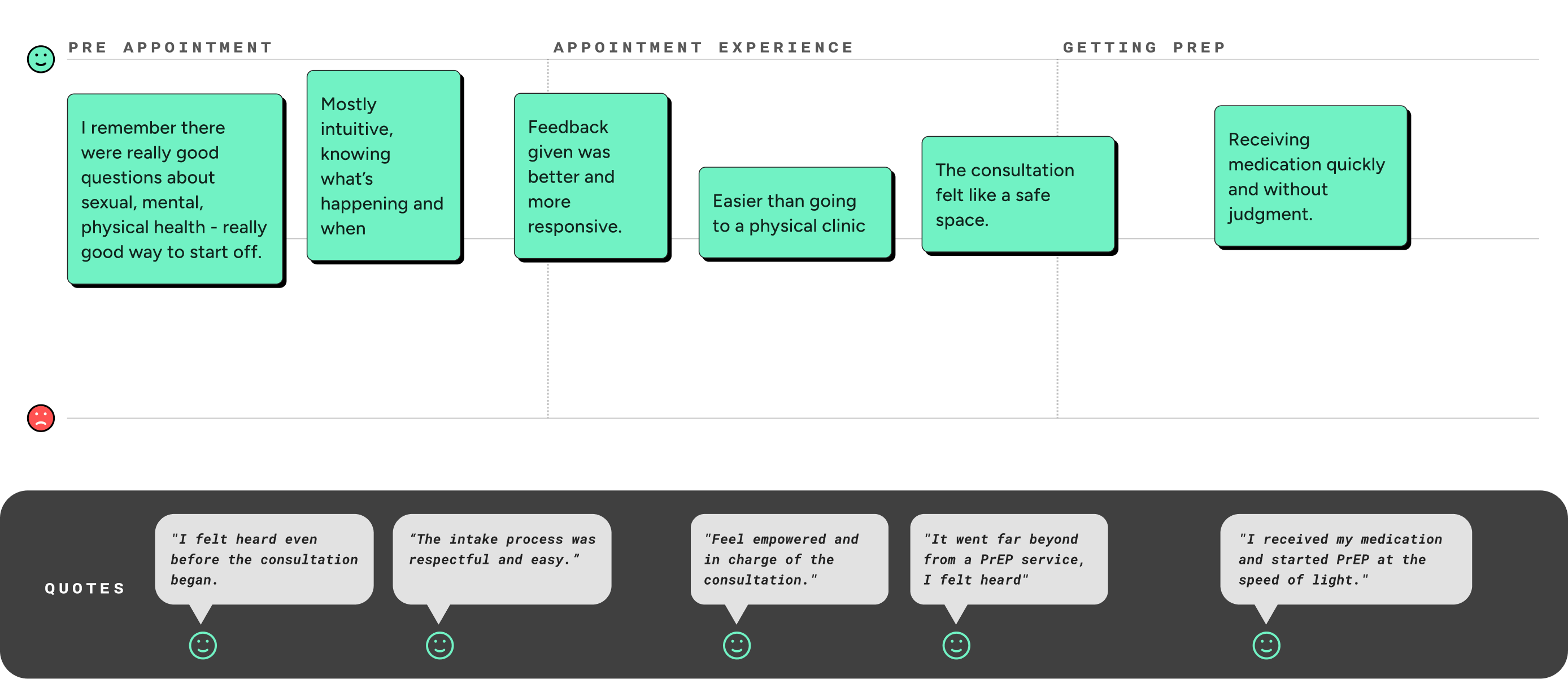
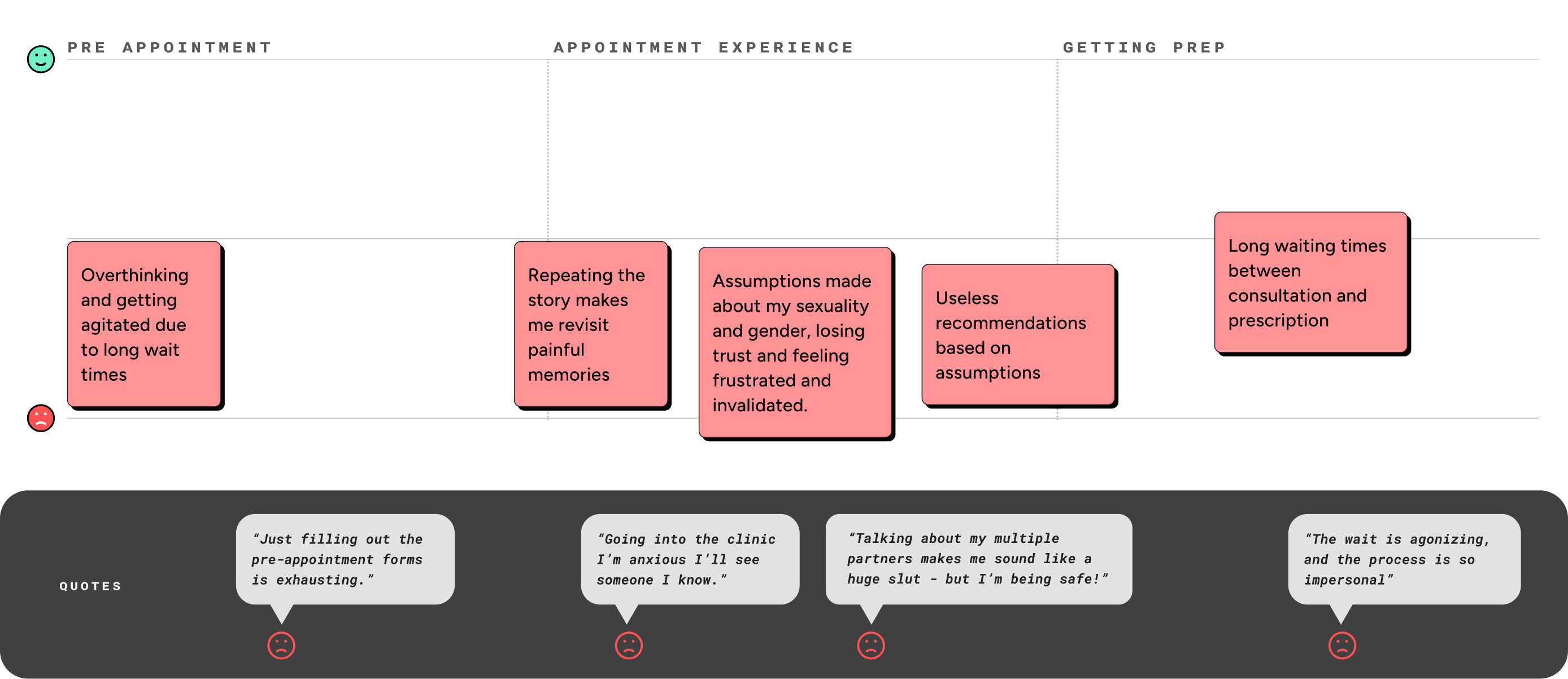
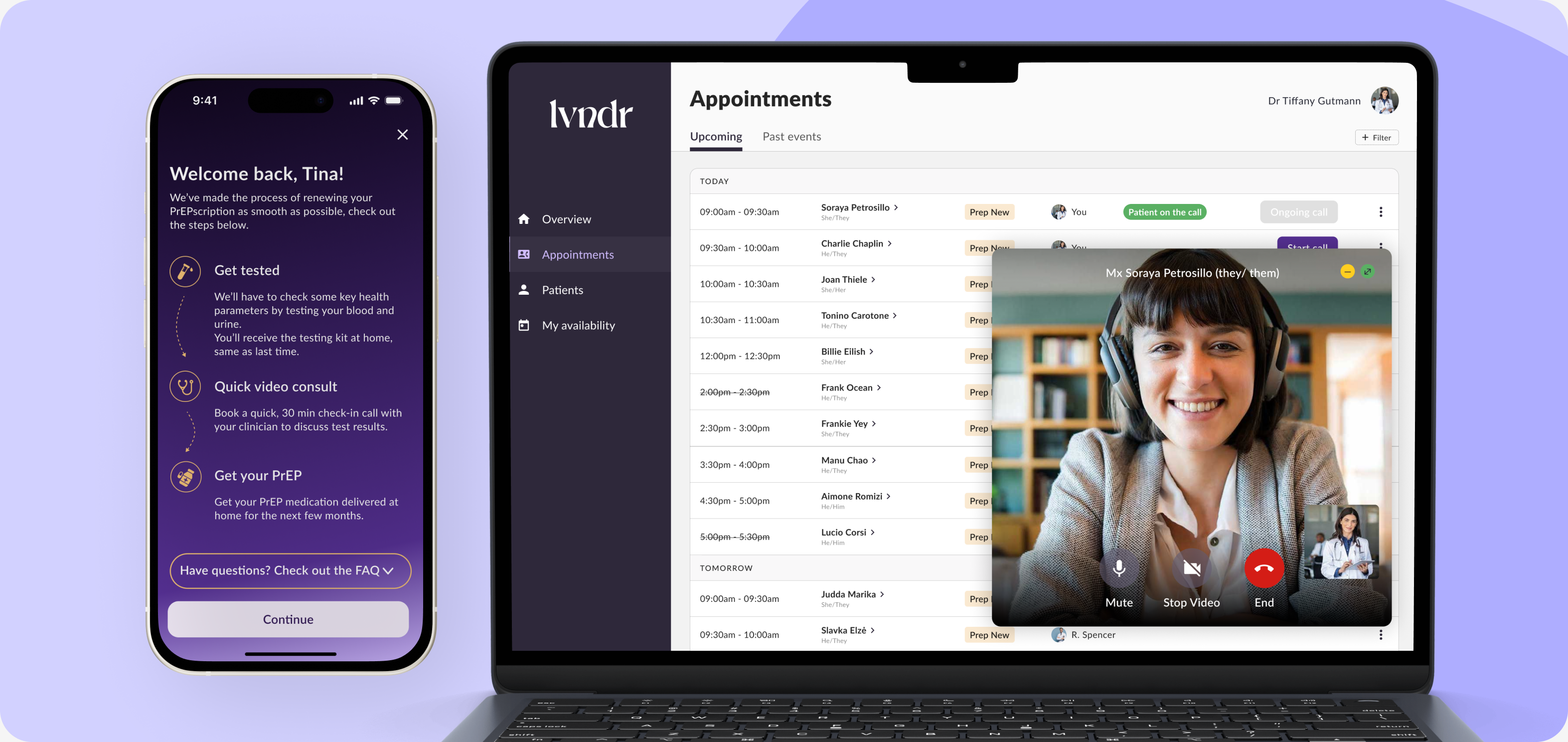
In traditional care, patients often have to repeat their story at every appointment, revisiting painful memories, while clinicians struggle to find their history. The questionnaire answered both. Patients share their information once, before the consultation, and clinicians arrive knowing who they're talking to.
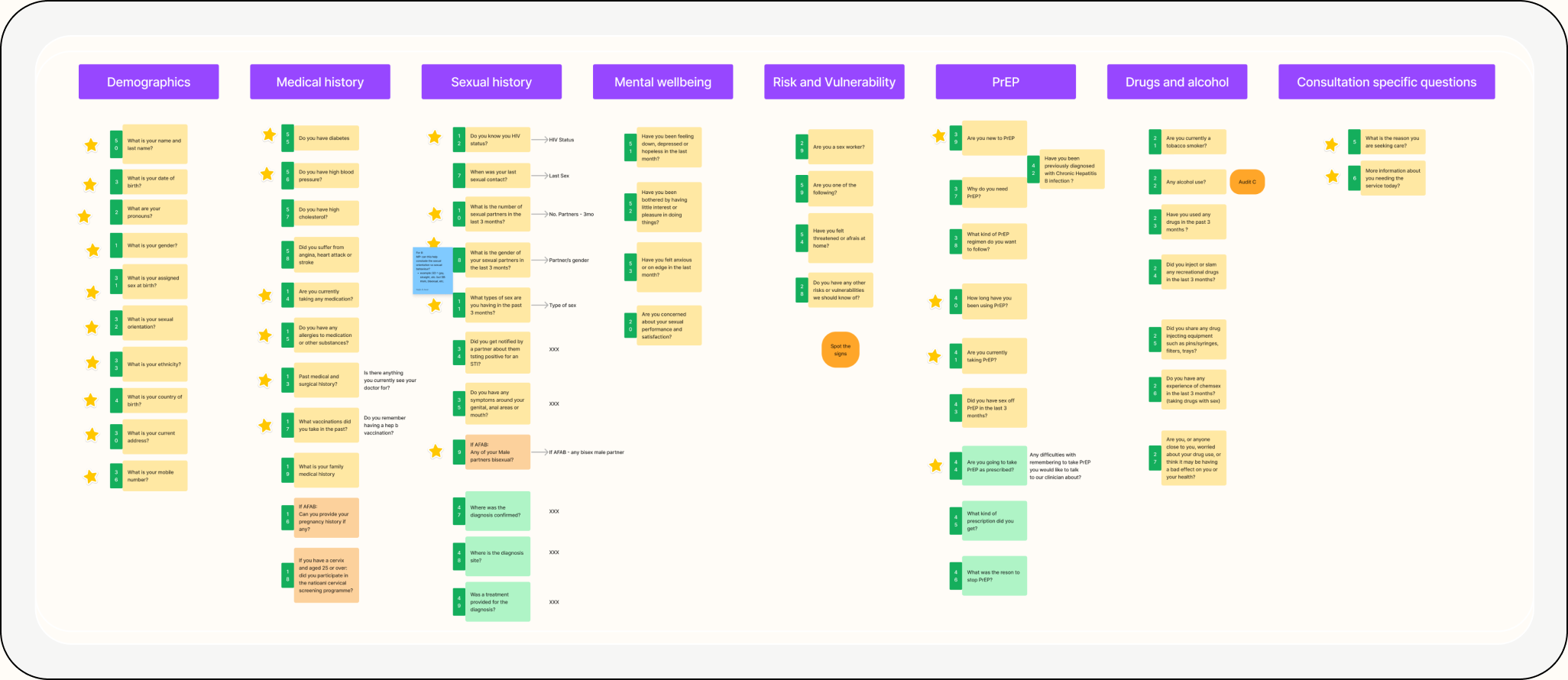
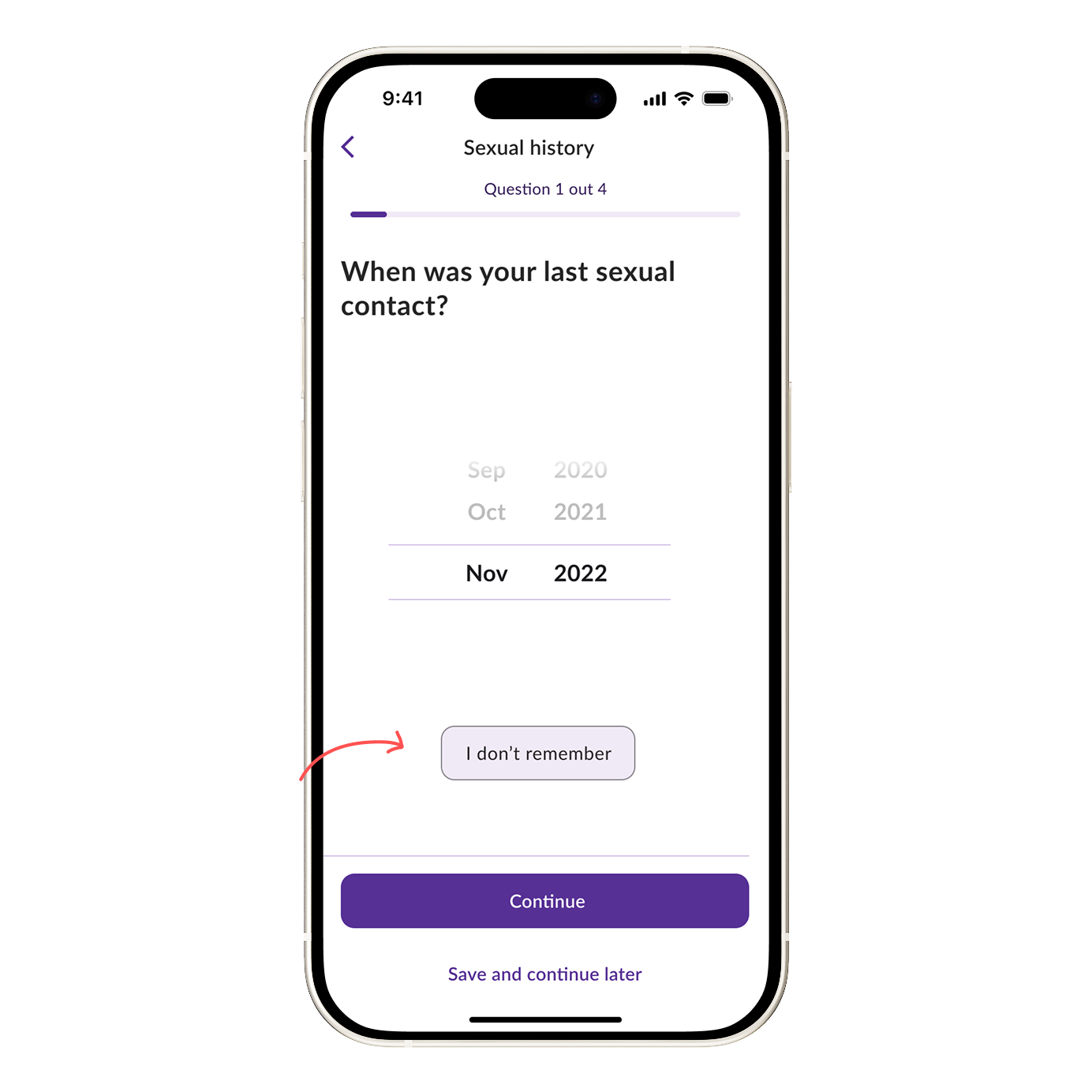
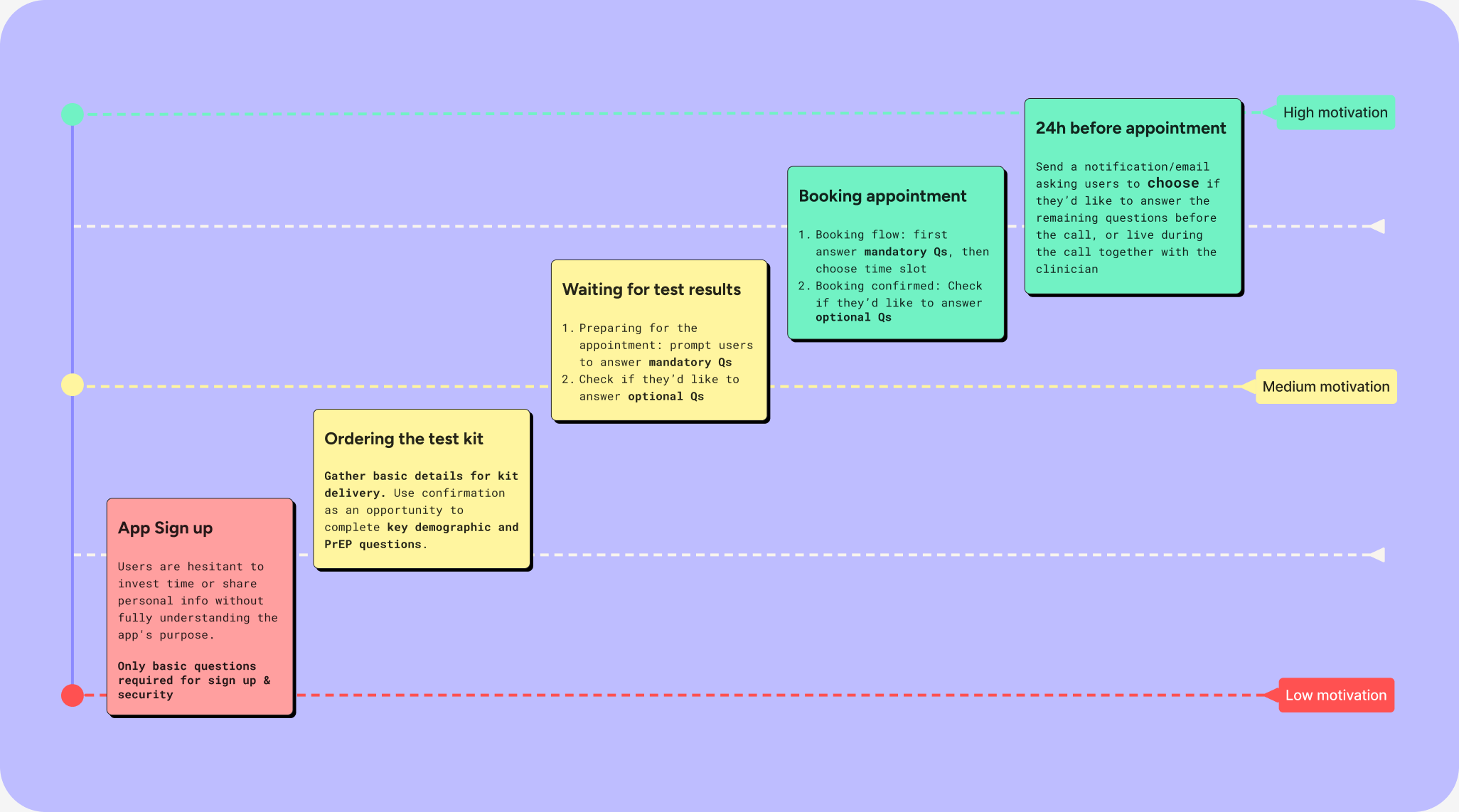
We started with over 80 questions. Working with clinicians and the product team, I organised and prioritised them, grouped them by relevance and marked each one as essential or optional.
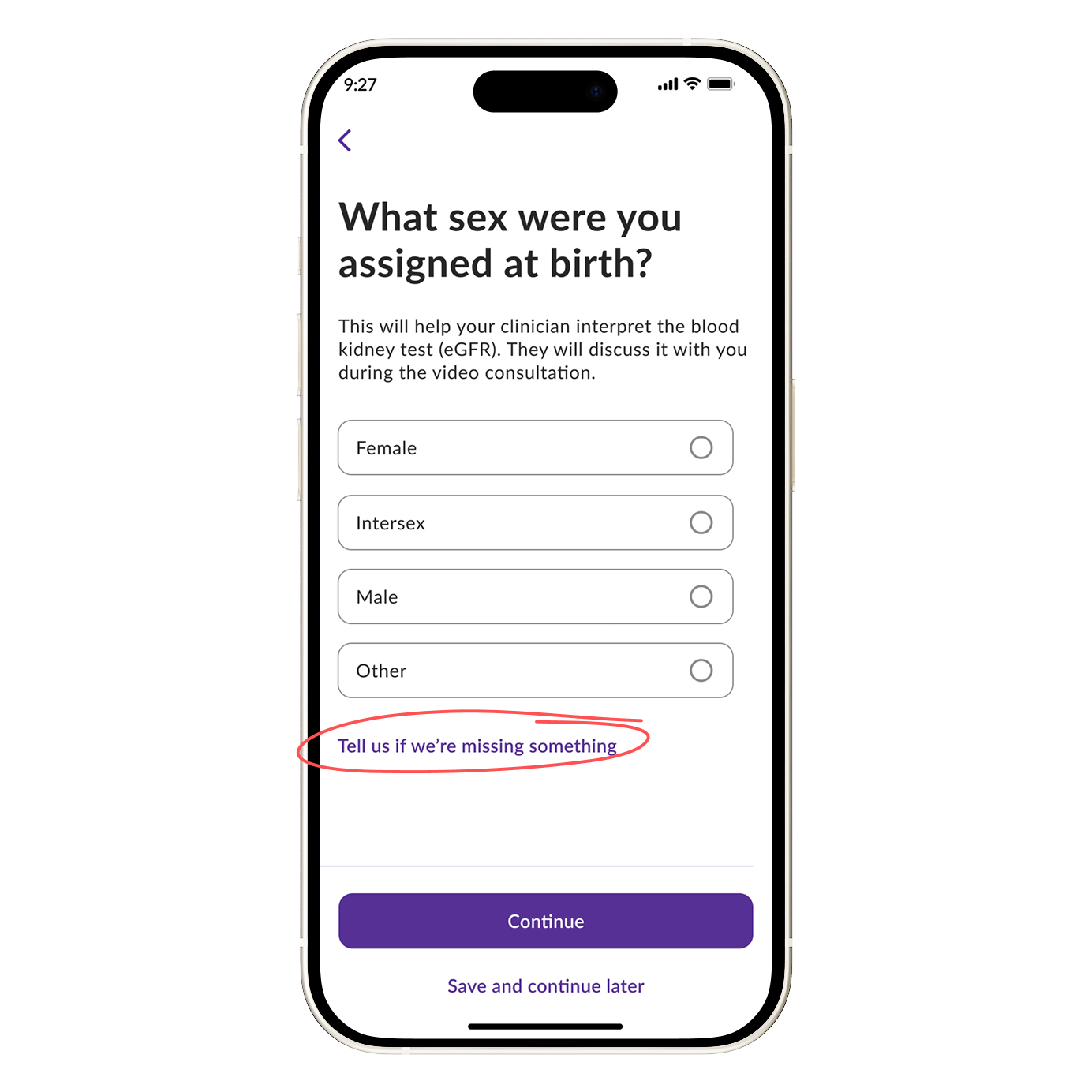
The questions covered demographics, medical history, sexual history, mental wellbeing, risk and vulnerability, and drugs and alcohol. Some were asked along the journey, exactly where they were needed. For example, we asked for preferred pronouns during onboarding, so we could address patients correctly in every communication from then on. Sex assigned at birth came later, only when we needed it for lab tests.
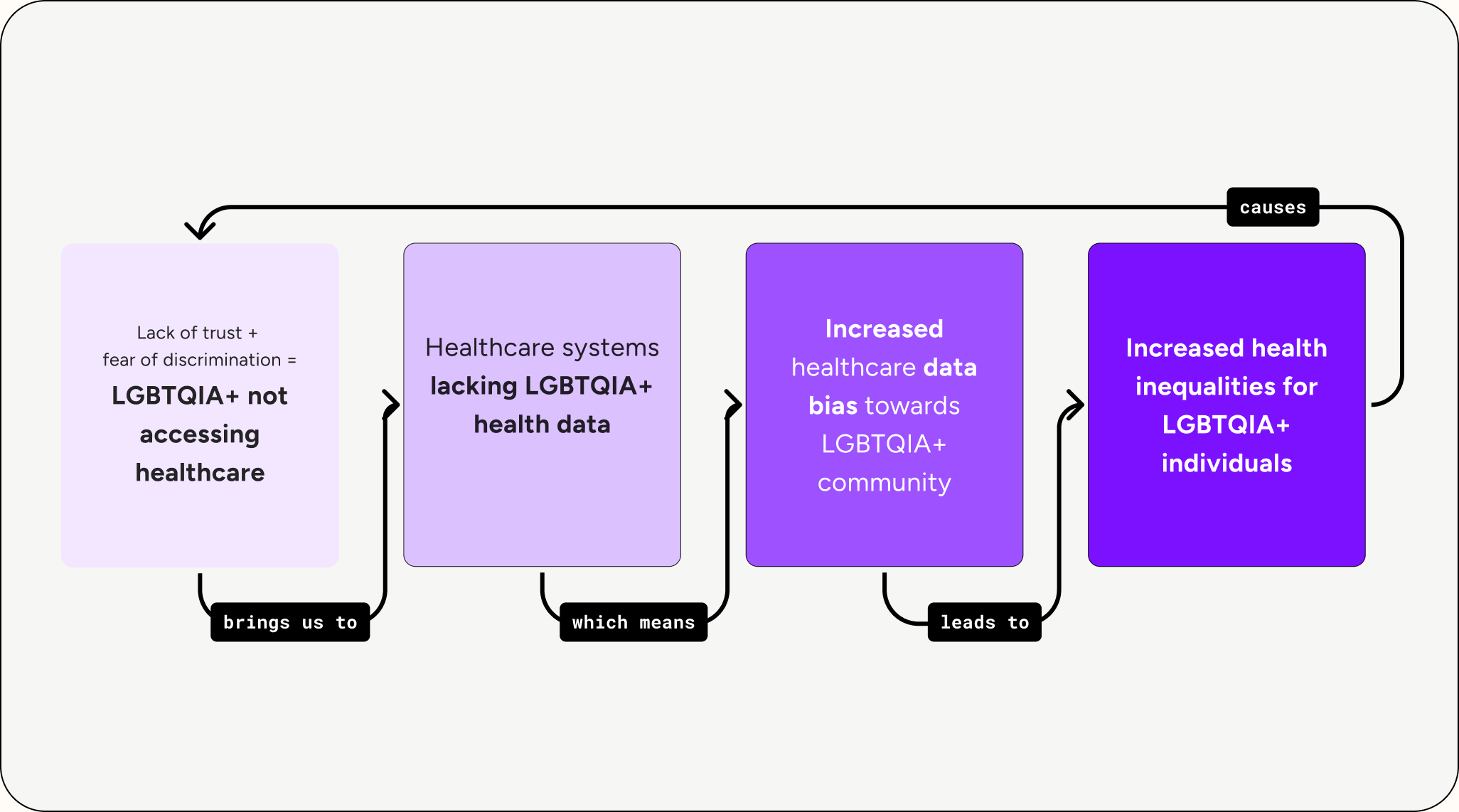
Some questions were essential to complete the PrEP pathway. Others we wanted answered to start building the largest LGBTQIA+ population health database, to help reduce inequalities in healthcare.
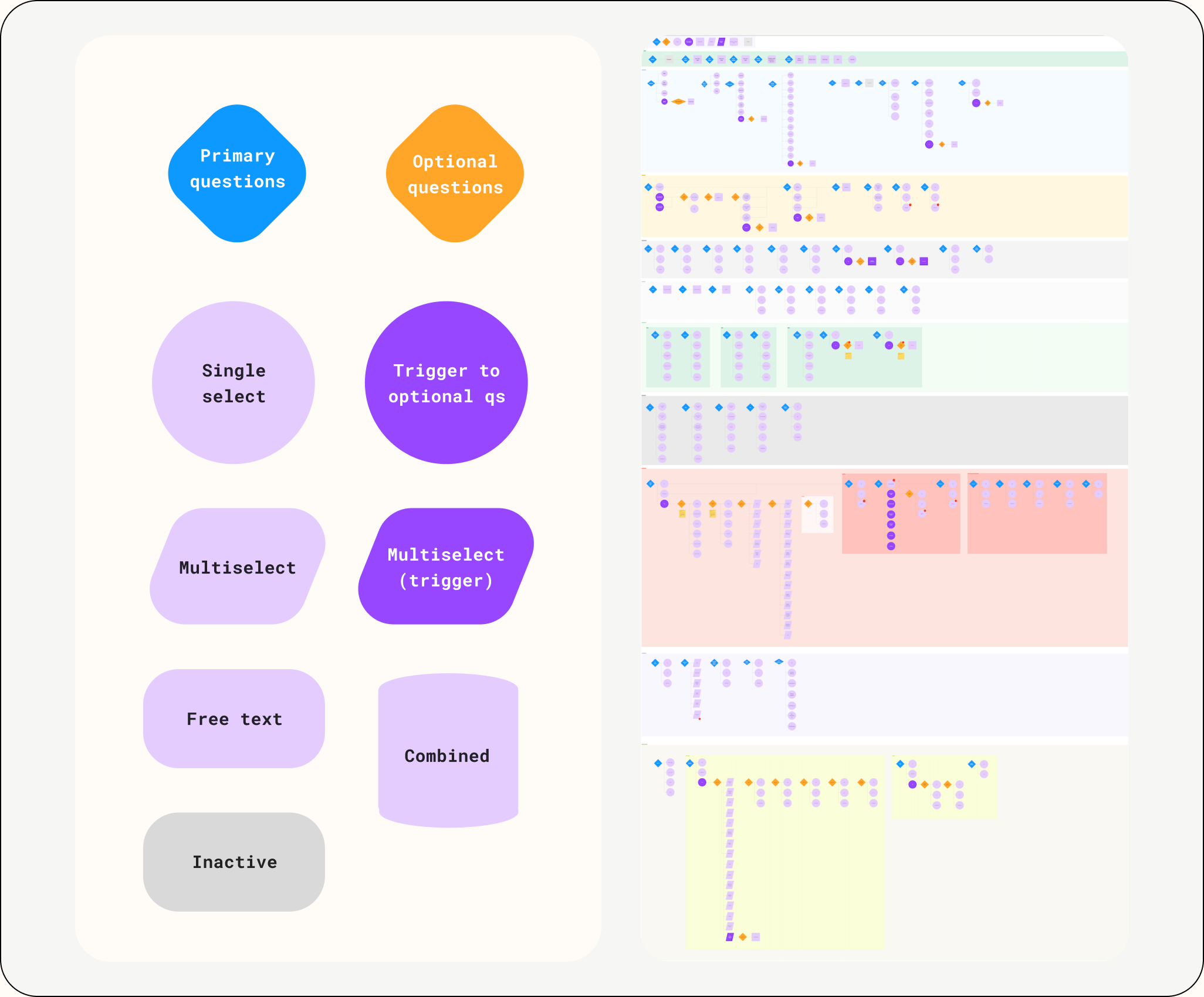
I then designed a dynamic flow where each answer shapes the questions that follow. For example, users with a negative or no HIV test result continue the questionnaire, while those who test positive are directed to a different service.
This keeps cognitive load low and gives every user a questionnaire journey tailored to them.